Trezor Login – Secure Authentication with Hardware Wallet
Your official guide to logging in and authenticating securely with Trezor hardware wallets.
Introduction
The Trezor Login process is a cornerstone of digital security for cryptocurrency investors. By using a hardware wallet like Trezor, you gain physical control of your private keys and ensure your funds remain safe from online attacks. Unlike hot wallets or software-only authentication, Trezor adds a vital layer of offline security to the login and transaction process.
In this in-depth guide, we’ll explore how Trezor Login works, how to set it up, and why it is one of the most trusted methods for securing access to crypto platforms, exchanges, and wallets. The content will walk you through step-by-step, with security best practices, troubleshooting, and advanced usage scenarios.
Why Trezor Login?
Trezor Login stands out from traditional authentication methods because it combines:
- Hardware-based protection: Keys never leave the device.
- Secure authentication: Each login must be confirmed on your Trezor device itself.
- Phishing resistance: You can verify addresses and login requests directly on the hardware screen.
- Cross-platform compatibility: Works with Trezor Suite, third-party wallets, and supported exchanges.
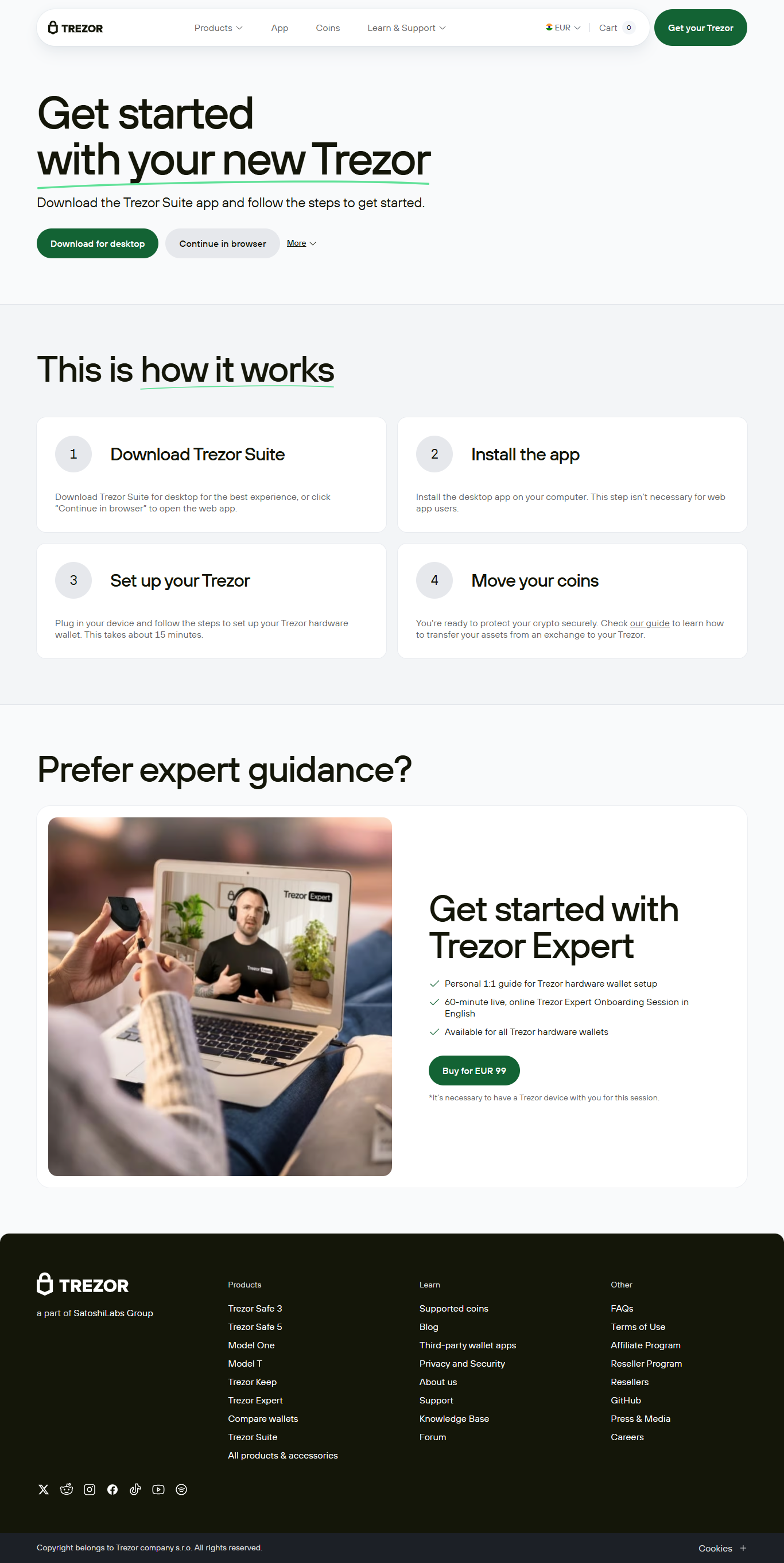
Step 1: Setting Up Your Trezor
- Unbox your Trezor device and connect it via USB or Bluetooth (for supported models).
- Navigate to the official website: trezor.io/start.
- Download and install Trezor Suite, the official desktop and browser interface.
- Initialize your device by setting a secure PIN and generating your 24-word recovery phrase.
Warning: Never share or store your recovery phrase digitally. Write it down and store it securely offline.
Step 2: Trezor Login with Trezor Suite
Trezor Suite provides the simplest way to log in with your Trezor device:
- Launch Trezor Suite and connect your device.
- Enter your PIN directly on the Trezor device.
- Use the on-device confirmation to approve login requests.
This ensures your credentials are never exposed to your computer or online threats.
Step 3: Logging into Third-Party Services
Many exchanges and decentralized apps support Trezor Login. When selecting a login method, choose Connect with Trezor. Confirm the login request directly on your hardware wallet.
By approving logins physically, you prevent unauthorized access, even if your computer or browser is compromised.
Security Best Practices
- Only download Trezor Suite from the official site.
- Always double-check the login URL for phishing attempts.
- Confirm all login prompts on the Trezor device screen before approving.
- Keep your device firmware up to date to patch vulnerabilities.
- Back up your recovery phrase in at least two secure, offline locations.
Troubleshooting Trezor Login
Device Not Recognized
Try another USB cable or port. Ensure Trezor Bridge (for browsers) or Trezor Suite (for desktop) is updated.
Forgotten PIN
You can reset your Trezor device, but will need your 24-word recovery phrase to restore access.
Login Request Not Appearing
Ensure pop-ups are enabled in your browser and that you are on the official Trezor site.
Advanced Features
- Passphrase Login: Add an optional passphrase for even greater security.
- Multiple Accounts: Manage multiple wallets and accounts with one device.
- Integration: Use Trezor Login with apps like MetaMask, MyEtherWallet, and various DeFi protocols.
FAQ
What makes Trezor Login safer than passwords?
Unlike passwords, Trezor requires physical confirmation on the device itself, preventing remote hacking.
Can I log in without my Trezor device?
No. Your device is essential for authentication. However, if lost, you can restore access with your recovery phrase on a new Trezor.
Is Trezor Login supported on mobile?
Yes, via Trezor Suite for Android and third-party integrations.